What is a dholi? Dhol vs dholki explained
Last updated 30 October 2026
A dholi is a person who plays the dhol, and a dhol player is simply the English name for the same thing. The dhol is a large two-headed drum played with two sticks, while the dholki is a smaller drum played with the hands, so the two are not the same instrument.
| Dhol | Dholki | |
|---|---|---|
| Size | Large barrel drum, worn on a strap | Smaller barrel drum, usually kept on the lap or the floor |
| How it is played | Two sticks, one thick and curved, one thin | Hands and fingers, sometimes with a stick on one side |
| Sound | Loud, deep and driving, built for the outdoors | Softer, warmer and closer, built for a room |
| Who plays | A dholi, often a professional | Often family and friends, sometimes a performer |
| When it is used | Baraats, entrances, bhangra, festivals, dance floors | Pre-wedding singing nights, songs at home, small gatherings |
What is a dholi?
The word dholi comes from dhol. A dholi is someone who plays it. In Punjabi culture, the dholi has long been the person who brings the beat to weddings, harvest celebrations and community events.
In the UK you will hear several names for the same role. People say dhol player, dholi, dhol drummer, and sometimes bhangra drummer. They all point to the same person: someone who wears the drum on a strap and plays it with sticks.
If you are searching for someone to play at your wedding, any of these words will do. We say dhol players on this site because it is the plainest name, and it is what most people type when they search.
What is a dhol?
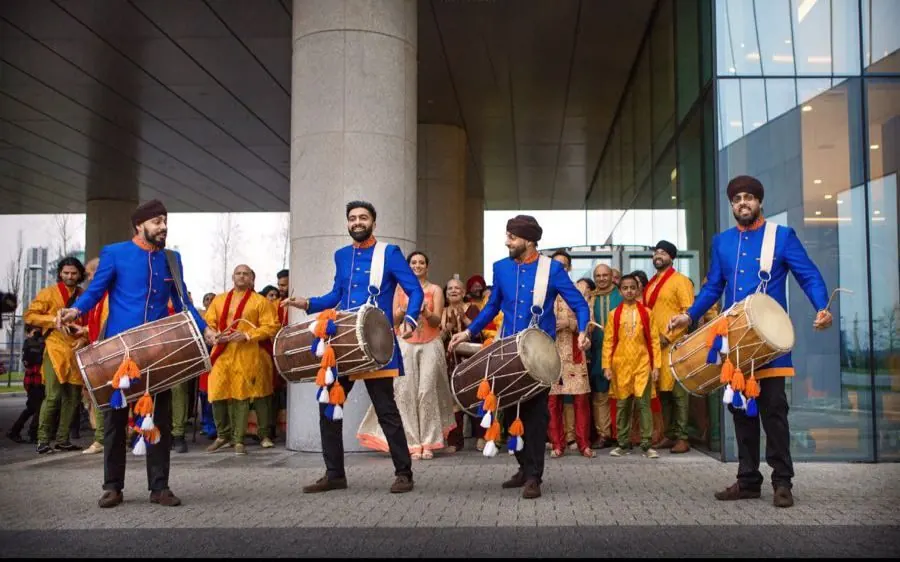
The dhol is a double-headed barrel drum from Punjab. It hangs from a strap over the shoulder so the player can walk and play at the same time. That is why it is the natural choice for a baraat.
One side of the drum gives the deep bass note and is hit with a thicker, curved stick. The other side gives a sharper, higher sound and is hit with a thin stick. Playing both together makes the driving rhythm that most people recognise from bhangra and Punjabi weddings.
The sound is loud and carries a long way, which suits an open street or a big hall. It is made to lead a crowd and to make people want to dance.
What is a dholki?
The dholki is a smaller drum with two heads, played with the hands. It is quieter and softer than the dhol. You are more likely to hear it at a family gathering than in a street procession.
Many families hold a dholki night before the wedding. Women and girls gather at home, sing traditional songs and play the dholki for hours. The mood is warm and relaxed. Nobody needs to be a professional, and a family member often plays.
A dholki is a lovely thing to have at a pre-wedding evening, but it is not the instrument people hire to lead a baraat. We supply dhol players only, so we do not offer the dholki.
Why people mix them up
The names are close, and both are drums from the same part of the world. Both are barrel shaped with two heads. At a distance, a photo of one can look like the other.
The easiest way to tell them apart is to ask how they are played. If it has two sticks and is worn on a strap, it is a dhol. If it is played with the hands and sits on a lap, it is a dholki. The setting helps too. Outdoors and loud, it is a dhol. Indoors, close and singing, it is probably a dholki.
When do you need a dhol player?
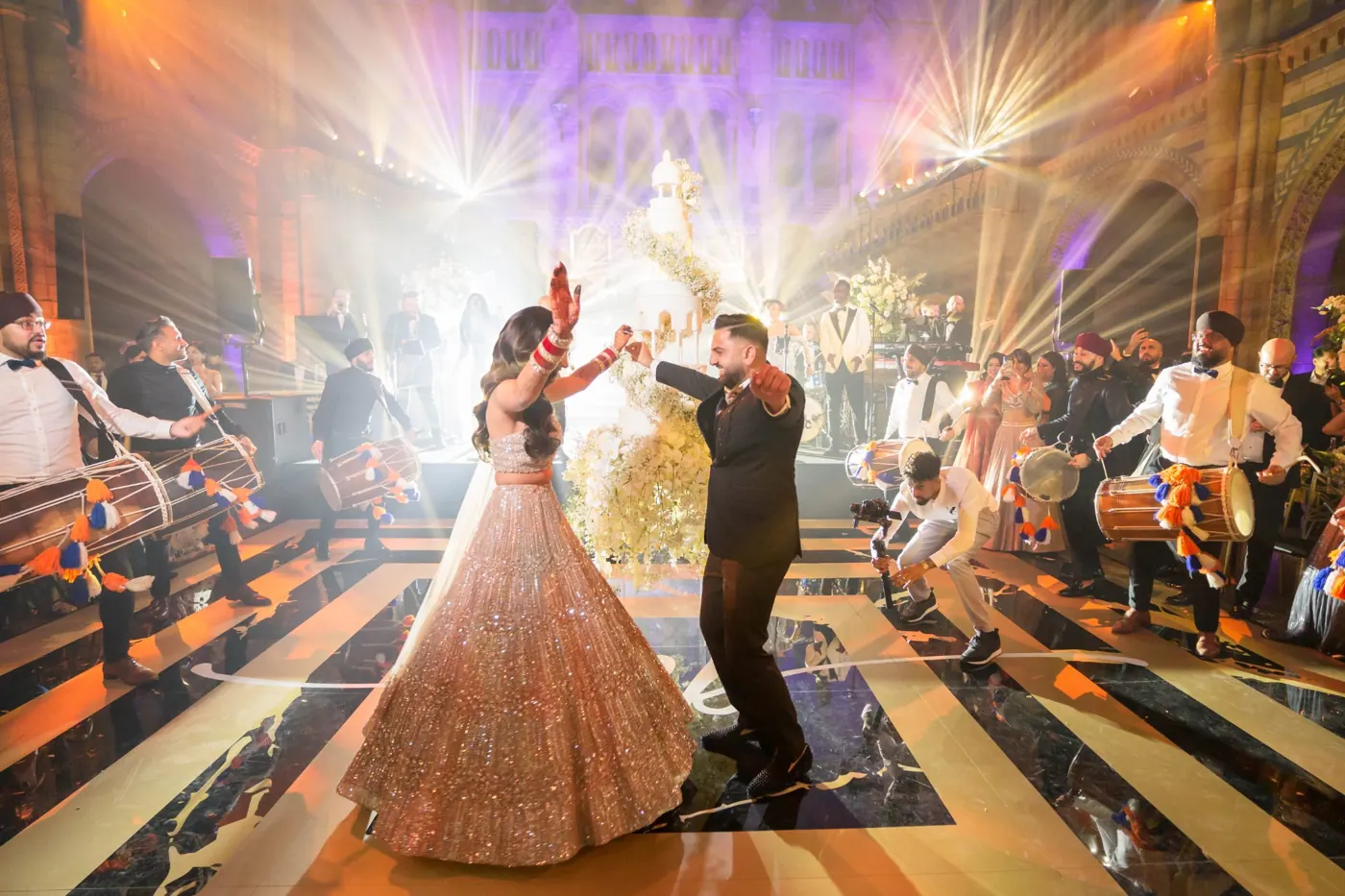
People book dhol players for a few main moments. The baraat is the best known, when the groom's party walks to the venue with drums leading the way. Others are the bride or groom's entrance, a short set to get people dancing, and a mehndi or reception party.
Our packages start from £195 for 1 dhol player and £295 for 2 dhol players: £295 for a baraat, jaan arrival or entrance, £395 for a dhol set, £495 for an entrance plus set and £695 for a full day. All players are vetted and insured.
Two players suit most baraats and smaller venues. Four are the most booked for wedding receptions, and 8 or more suit big venues and large outdoor baraats. Teams of 4 or more are quoted on your requirements.
Does a dholi do more than play?
A good dholi reads the crowd. They know when to build the beat, when to slow it, and when to hold for an announcement. They can match their playing to a song, a dancer or a moment such as the groom arriving.
They also take care of practical things. They arrive on time, know how to move with a procession, and adjust their volume if a venue asks. You do not need to be an expert on the music. Tell us what you are planning and we will suggest how to use the players.
Book dhol players for your wedding
More guides: How many dhol players do I need for my wedding? · How long is a baraat, and how to plan the dhol · Can you have dhol indoors? Venue sound limits explained. All guides