Dhol players vs band baja: which for your baraat?
Last updated 30 October 2026
A dhol-led baraat usually starts with 2 players, while a band baja is a larger group with brass and drums, so the two are quite different in size. Both can lead a baraat well, and the right choice depends on the sound you want and the size of your procession.
| Dhol players | Band baja | |
|---|---|---|
| What it is | A small group of drummers | A larger band, usually with brass, other instruments and drums |
| Typical size | 2 players, 3 or more for bigger baraats | A bigger group of musicians |
| Sound | Rhythm led, loud, driving, bhangra feel | Melody led, brass and film tunes with a beat underneath |
| Style | Punjabi, high energy, people dance to the beat | Traditional baraat band, many songs, a parade feel |
| Space needed | Little, players can move through a crowd easily | More, a band takes up more room on a street |
| Best for | Punjabi baraats, entrances and dance floor sets | Large processions where a full band is part of the tradition |
What is a band baja?
A band baja is a wedding band, mostly known from North Indian baraats. It usually has a brass section, other wind instruments and drums, and plays well-known songs while the procession moves. Many people picture a uniformed group leading a groom on a horse.
The sound is melodic. People recognise the tunes and sing along. The group is larger, so it needs more space and more planning.
We only supply dhol players, and we do not offer a band baja. This guide is here to help you compare the two honestly, even though we are on one side of it.
What a dhol-led baraat sounds like
A dhol baraat is built around rhythm. There are no tunes to sing. The beat itself is what carries people along. It is the sound most people link with Punjabi weddings and bhangra.
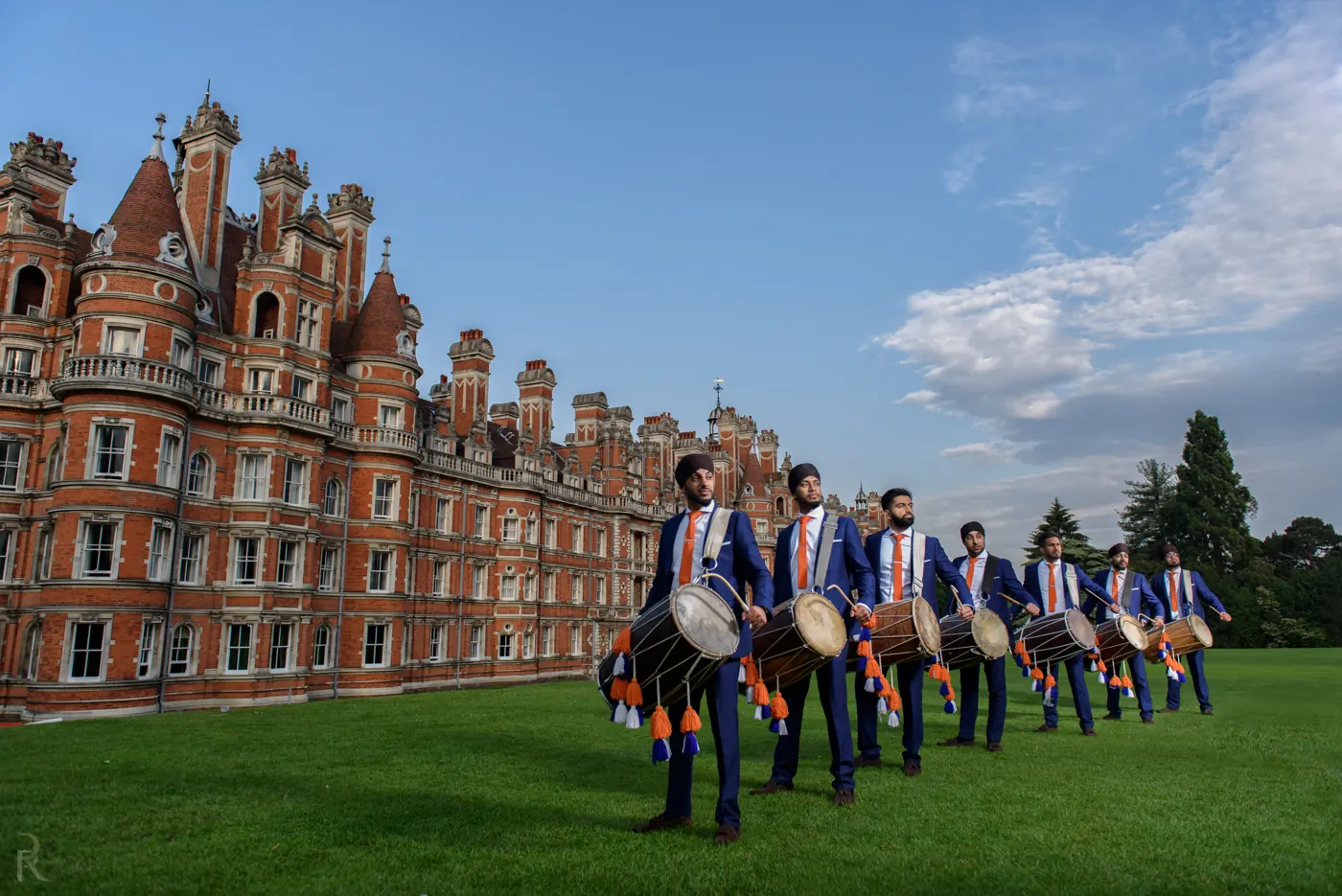
Two players can fill a street with sound. They walk at the front, set the pace and stop where the family wants to dance. Because the group is small, it is easy to move through a crowd and easy to fit into a narrow route.
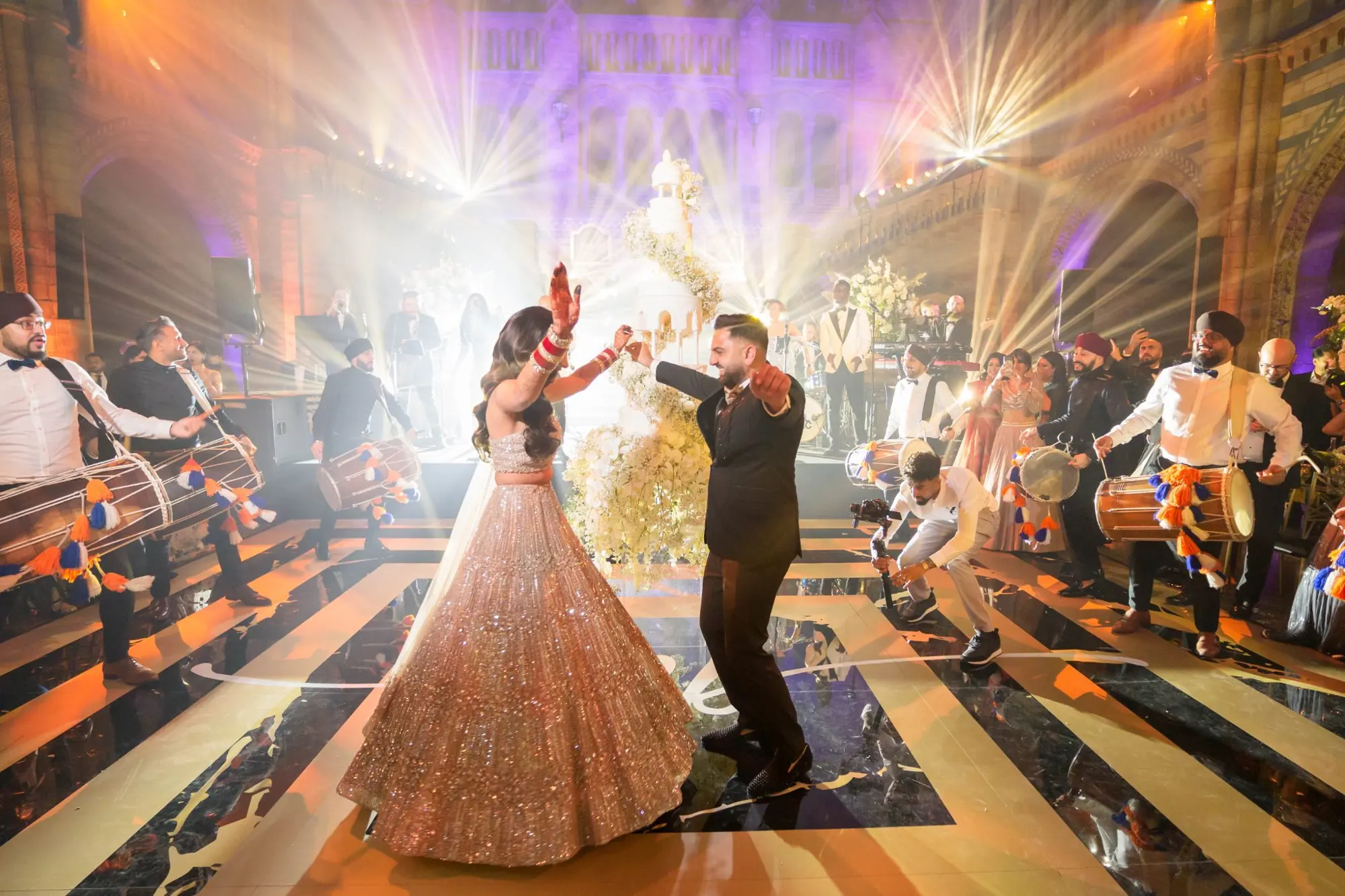
If your family is Punjabi, a dhol-led baraat is often what the older relatives expect. Even if your family is mixed, the beat is easy to dance to, which helps when guests do not know the choreography.
Does a baraat work without brass?
Yes. A baraat does not need brass to work. What it needs is energy, a clear pace and a sound that makes people want to move together. A dhol does that on its own.
Some families like the extra melody of a brass band, and that is a fair preference. Others find a band too busy and prefer the focus of the drums. Neither is wrong. It is a question of what your family wants to hear.
Size, space and the venue
A bigger band needs a bigger street. If your route is narrow, has tight corners or runs through a car park, a small dhol group is easier to manage.
Venues can also affect the choice. Some have limits on noise or on how many people can gather outside. A dhol group is easier to fit in. It is worth speaking to your venue about any rules first. Our guide on dhol indoors lists the questions to ask.
Cost to plan matters too. A larger band means more people to coordinate, more travel and more space on the day. A dhol group is simpler, and you only need to agree the plan with one team.
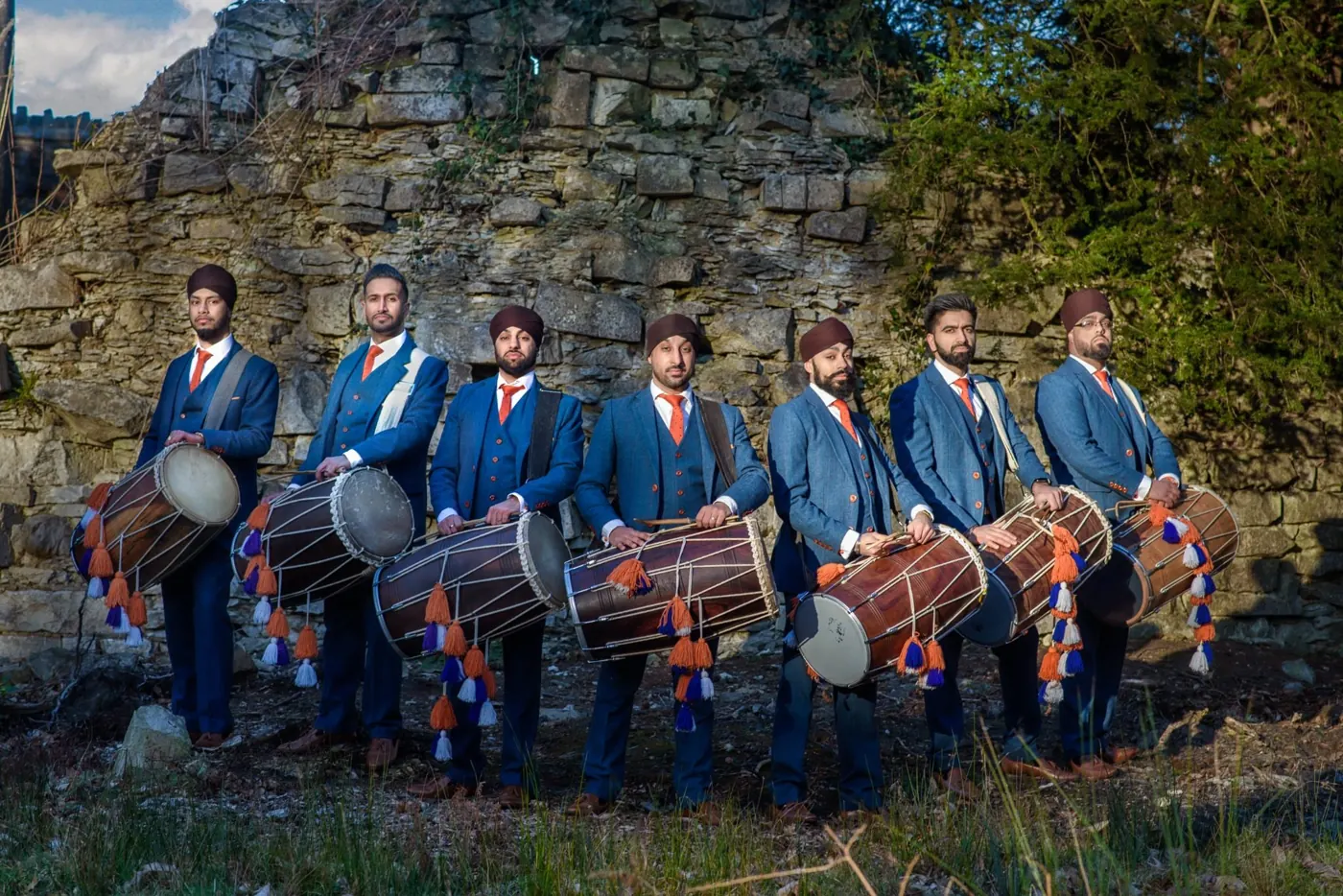
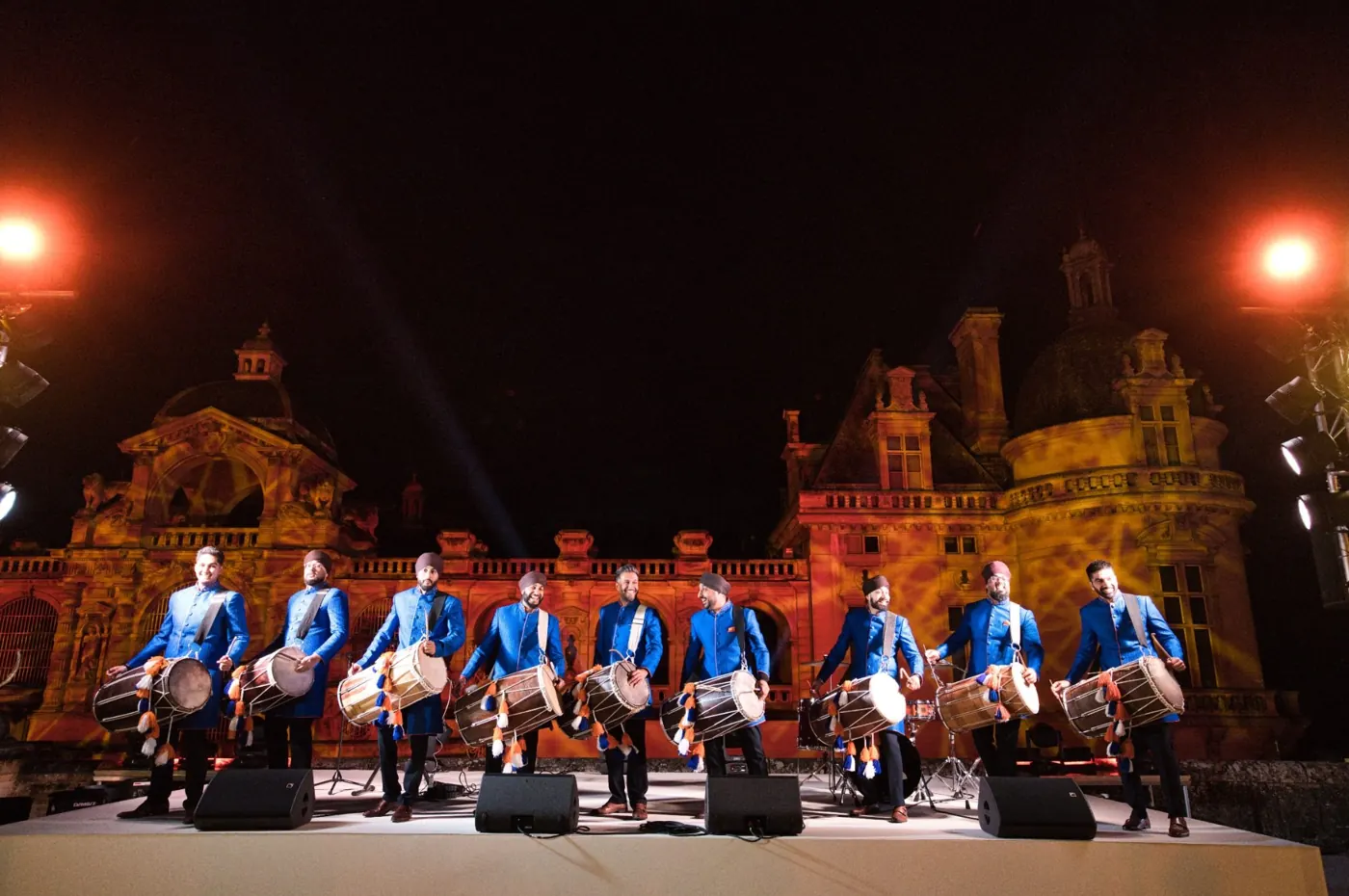
Think about how many people are in your baraat too. For a large procession, a band can be part of the picture. A dhol group can also scale up: 2 players suit most baraats, 4 are the most booked for receptions, and 8 or more suit big venues.
What a dhol baraat includes with us
Our baraat package is 2 dhol players from £295, and 1 dhol player is from £195. If you also want a performance, a dhol set is from £395, an entrance plus set from £495 and a full day from £695. All players are vetted and insured.
If you want more than two players, extra players are added to your quote. We do not set a fixed figure for them, because the right number depends on your plan.
How to decide
Start with the people. Ask your family what they picture when they think of the baraat. If they picture the beat and the dancing, dhol is a natural fit. If they picture a full band with tunes, a band baja might suit better.
Then think about the practical side. How wide is the route? How many people are walking? What does the venue allow? Think about what you can plan and manage on the day.
Some couples also want both a band and dhol players. That is a choice you can make with whoever supplies the band. If you want the dhol side, we can plan for it to fit around them.
Book dhol players for your baraat
More guides: How many dhol players do I need for my wedding? · What is a dholi? Dhol vs dholki explained · How long is a baraat, and how to plan the dhol. All guides