Dhol player venue rules: what to check before you book
Last updated 30 October 2026
Some venues limit how long dhol can play, how many players you can have and when a baraat can start. These rules are often unwritten, so ask before you book rather than on the day.
Why venues set limits
A dhol is built to carry across a procession, so it is loud indoors. Neighbours, other events on site and sound limiters all push venues to set rules.
The rules are rarely in the hire pack. Ask the venue, your caterer and your planner, because each may know something the others do not.
Examples from UK venues
Froyle Park: 10 minutes of dhol and a maximum of two players.
North Mymms Park: a maximum of two players, and they usually need to finish by 10:30pm.
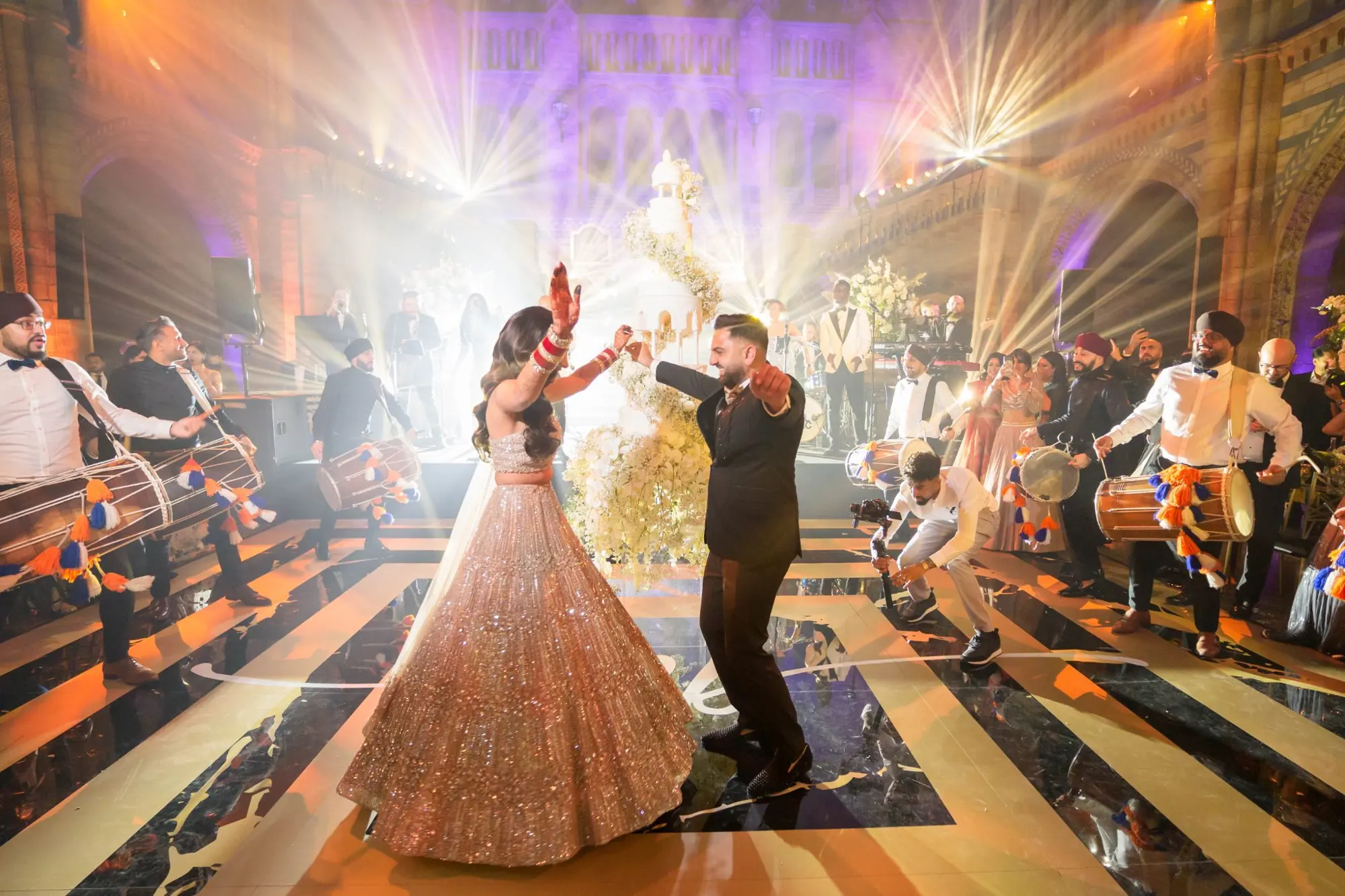
Natural History Museum: the Hintze Hall has lively acoustics and the venue has started trialling a maximum of four players.
The Fairmont Windsor Park: a baraat cannot start before 10am.
Rules change, so confirm the current position with the venue.
How limits change the plan
A 10 minute limit means one tight, high-energy set. A two player cap means a smaller sound, so the entrance moment matters more. An early finish means moving the main set earlier instead of losing it.
Ask your venue
Is there a maximum set length? A maximum number of players? A finish time, and is it fixed? When can a baraat start and where can it go? Is dhol allowed indoors? Is there a sound limiter?
If the rules are strict
Dhol still works. A well-timed entrance with two players is a big moment, and a full baraat outside before the limits begin is often the best use of a bigger team.
Tell us your venue and get a quote
More guides: How many dhol players do I need for my wedding? · What is a dholi? Dhol vs dholki explained · How long is a baraat, and how to plan the dhol. All guides