12 ways to use dhol players at a wedding or party
Last updated 30 October 2026
Dhol works best wherever you want the room's attention and people on their feet. Here are twelve moments where it earns its place, and one where it does not.
Before the wedding day
1. Jaggo: a player leads the family and the decorated pot through the street or hall.
2. Mehndi: keep it calm for the henna, then finish with drums and bhangra.
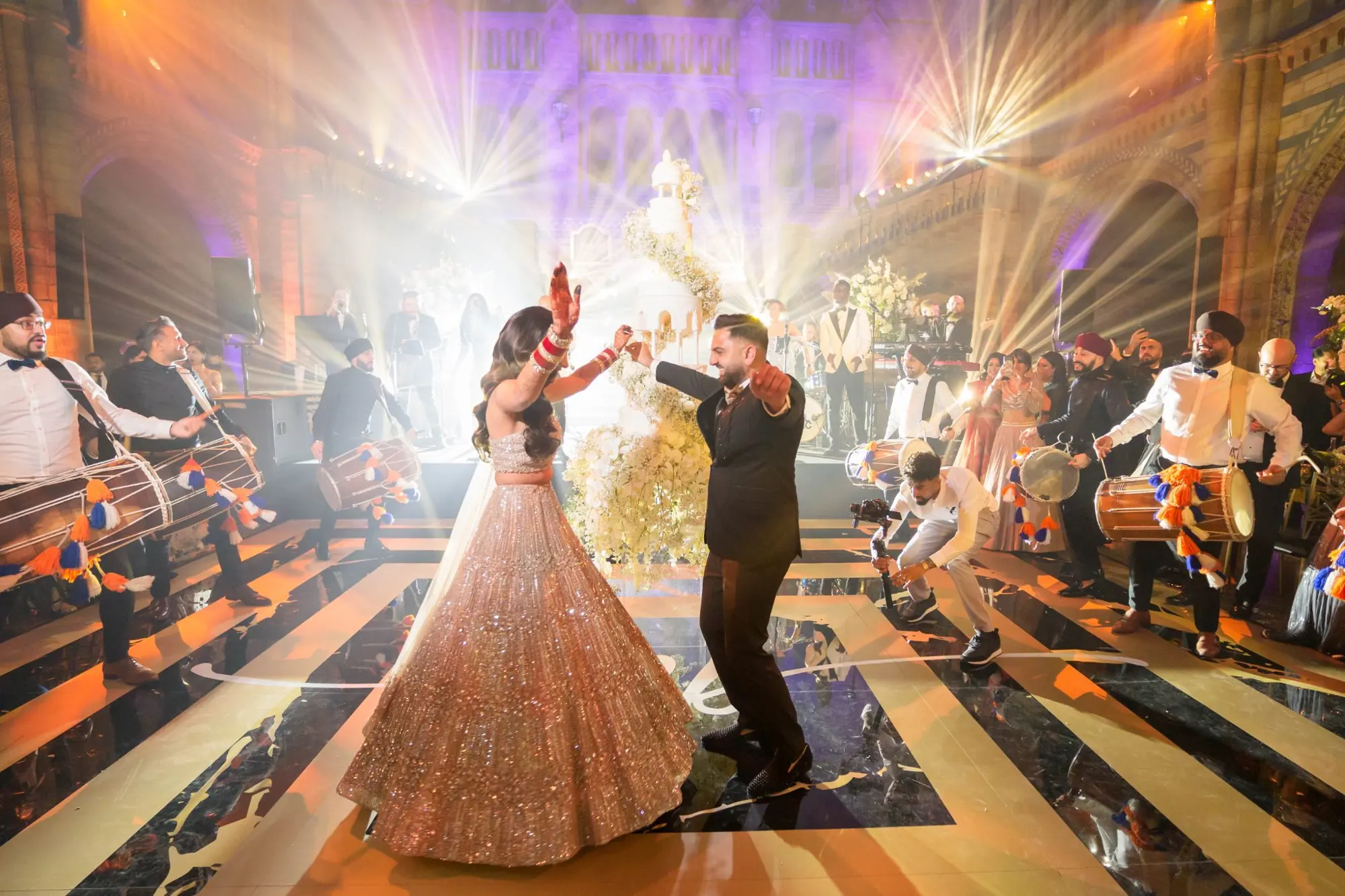
3. Sangeet: drums join the performances and open the floor at the end.
4. Engagement or chunni: a short burst as the two families arrive.
On the wedding day
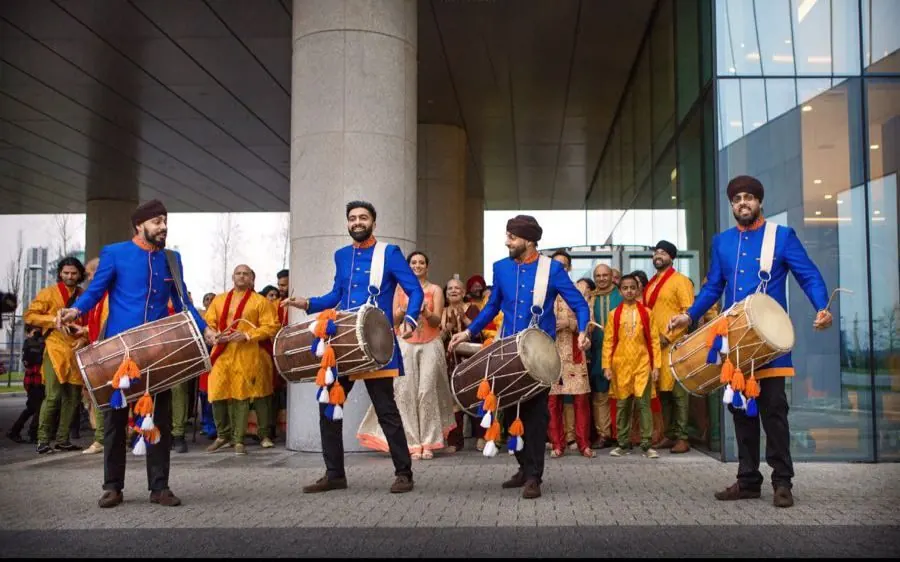
5. Baraat: players lead the groom's procession, often with a horse, car or DJ truck.
6. Milni: a sharp roll as the families meet and exchange garlands.
7. Doli: a softer beat as the bride leaves.
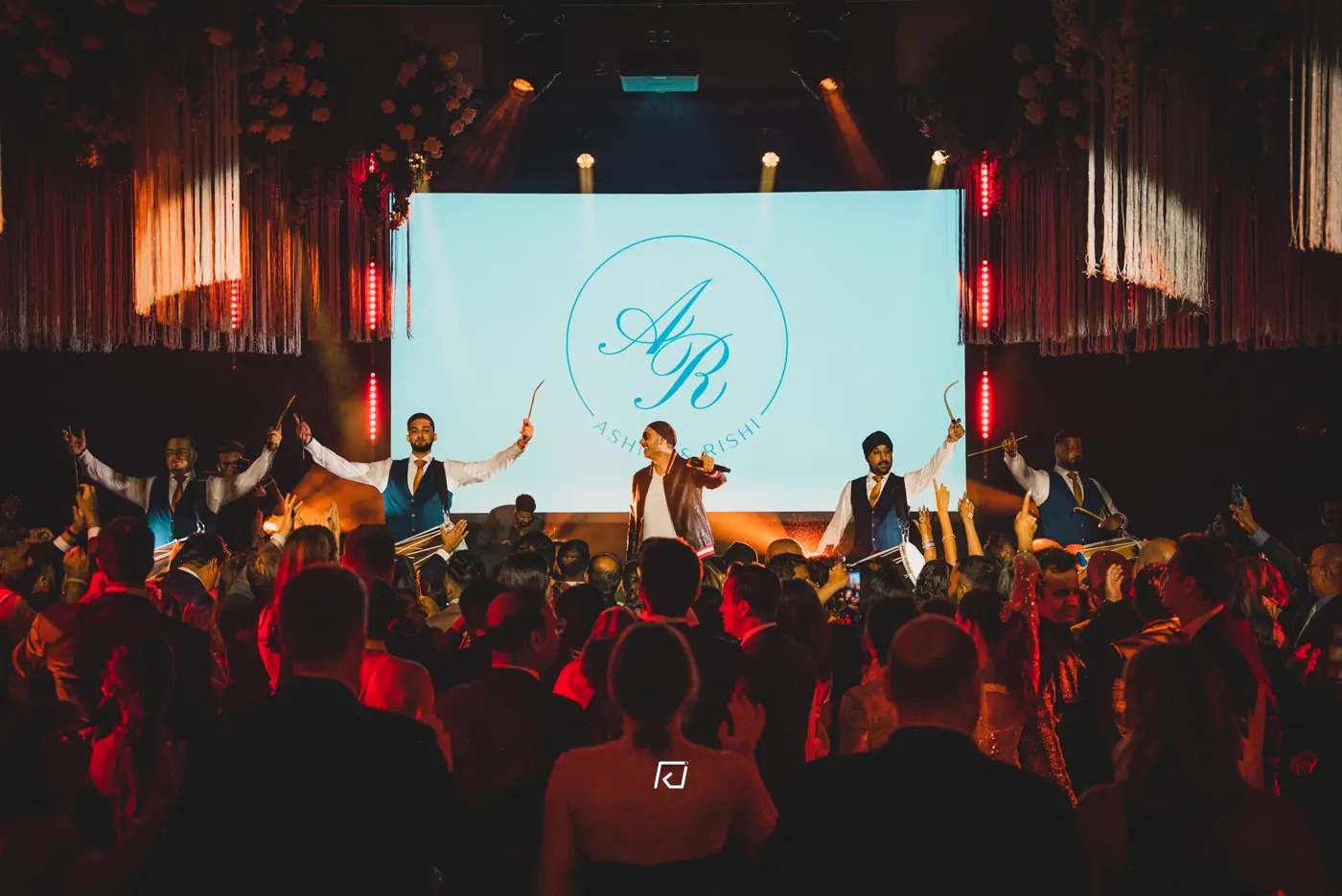
8. Reception entrance: start the drums out of sight in the corridor. The sound arrives before you do and the room turns to the doors.
Beyond weddings
9. Surprise birthday: players walk in with the cake.
10. Awards night: a dhol opener before the host.
11. Vaisakhi or Diwali at work: a short set in reception.
12. Launch or store opening: drums to pull a crowd before the reveal.
What to pair it with
Bhangra dancers get guests moving quickly. A horse, vintage car or DJ truck carries the baraat while the drums walk alongside. A DJ keeps the evening going after the set.
When not to use dhol
Skip it during a nikkah, a quiet ceremony or a seated meal where people want to talk. Bring it in once the energy should rise.
More guides: How many dhol players do I need for my wedding? · What is a dholi? Dhol vs dholki explained · How long is a baraat, and how to plan the dhol. All guides